
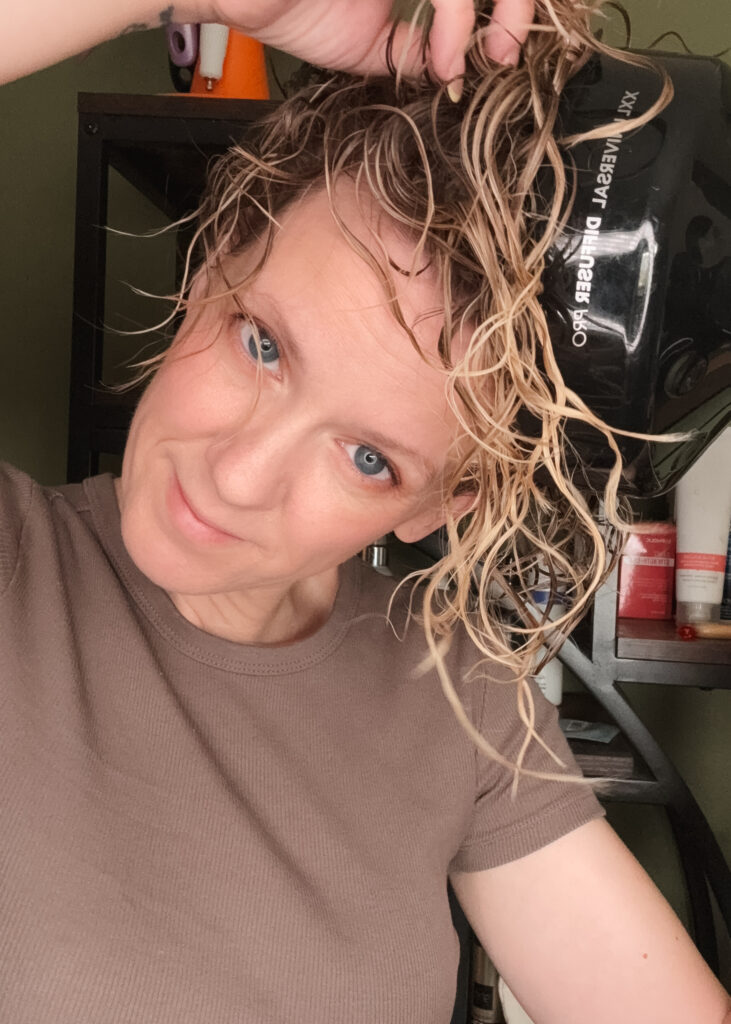
The idea of building a curly hair routine can seem overwhelming, especially considering that our curls look different from one washday to the next. You can do two washdays exactly the same, with the same products and techniques and walk away at the end of them with two completely different results. And when you add in the mountain of information online and talk of porosity, chelating and scrunching out the crunch, it’s no wonder we start this journey scratching our heads.
But let’s break it down to make it easy.
At the crux of it, a washday routine purely consists of cleansing, conditioning and styling. It only becomes more complicated because we have to take certain things into account, for example our hair texture and the water in our homes. However knowing these things actually makes your routine easier and they help us choose our products and techniques. So what are the questions that we need to answer before we start building?
Determine your hair texture;
Fine = You need light weight products and possibly less conditioning. You may need more protein in your routine.
Coarse = You may need more moisturising products and can handle creams, butters and oils better than fine hair can.
Do you have hard or soft water?
Soft water = Your will need less conditioning products and possibly more protein in your routine.
Hard water = The hard water minerals will deposit onto your hair strands, which if not removed can cause your curls to become weighed down, dull and lifeless. You may need to clarify more often and will need a chelating shampoo.
Are you starting your curl journey with any heat or colour damage?
Heat & colour damage = You will need to add a bonding treatment into your routine.
No damage = One less treatment to do!
Now we could ask ourselves loads more questions, such as what is our porosity? Does our hair love water when styling and do we prefer a foam over a serum? But too many variables at the beginning is just going to overwhelm you and there will be a time and a place for everything, but right now, we want to build a basic routine that gets results.
Once you have the answer to the three questions above you can build your routine easily. So shall we?
Cleansing –
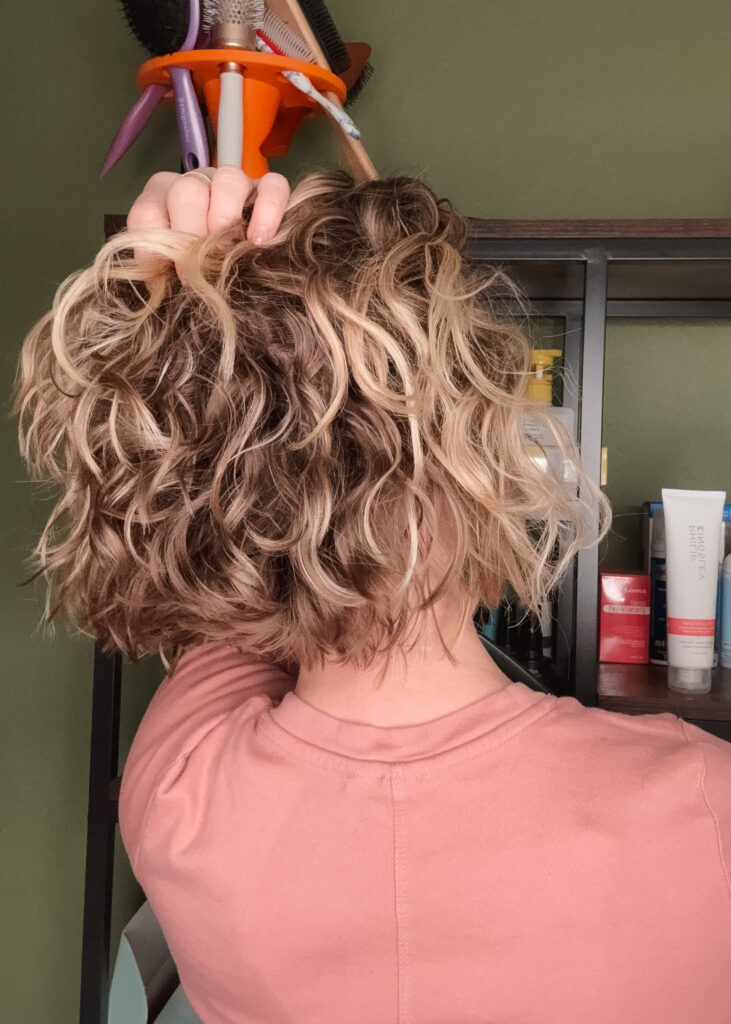
Cleansing is the most important part of your washday. If this part doesn’t go well then your curls are going to struggle to form and hold. The aim of cleansing is to remove your product from the previous washday, oils, pollution, sweat etc and to also keep your scalp in tip top shape. A blanket statement that curls are dry is often said but typically it is those with a coarser texture or a tighter pattern that experience this dryness. This is purely because the oils from the scalp have a harder time making their way round the twists and bends on the curls. Whether your curls are particularly dry or not we typically use a sulphate free cleanser, known as a “Low Poo”. These clean your hair and scalp but do not dry your strands out so you can use them as often as you need to with no ill effects. Nearly all curly brands offer at least one option for a low poo cleanser.
At least once or twice a month you should be clarifying your fine curls. These are shampoos that are designed to give a deeper clean. They thoroughly remove all product build up and if you choose a chelating shampoo it will also remove hard water mineral deposits. The finer your strands the easier you will experience build up, therefore needing to clarify more often. For example, I clarify once a week but if you start with once every two weeks and adjust accordingly based on your own curls.
If you have soft water look for a clarifying shampoo that contains C14-C16 Olfein Sulfonate
If you have hard water look for a chelating shampoo that has Tetrasodium EDTA or Disodium EDTA
Notes on cleansing –
- Aim to wash 2-3 times a week. Typically, the finer your texture, the more often you will need to wash.
- Always double shampoo. The first round removes product, oil etc. The second round cleanses your hair and scalp.
- If your scalp feels itchy, tender or sore then it’s time to wash! Always be guided by your scalp.
Conditioning –
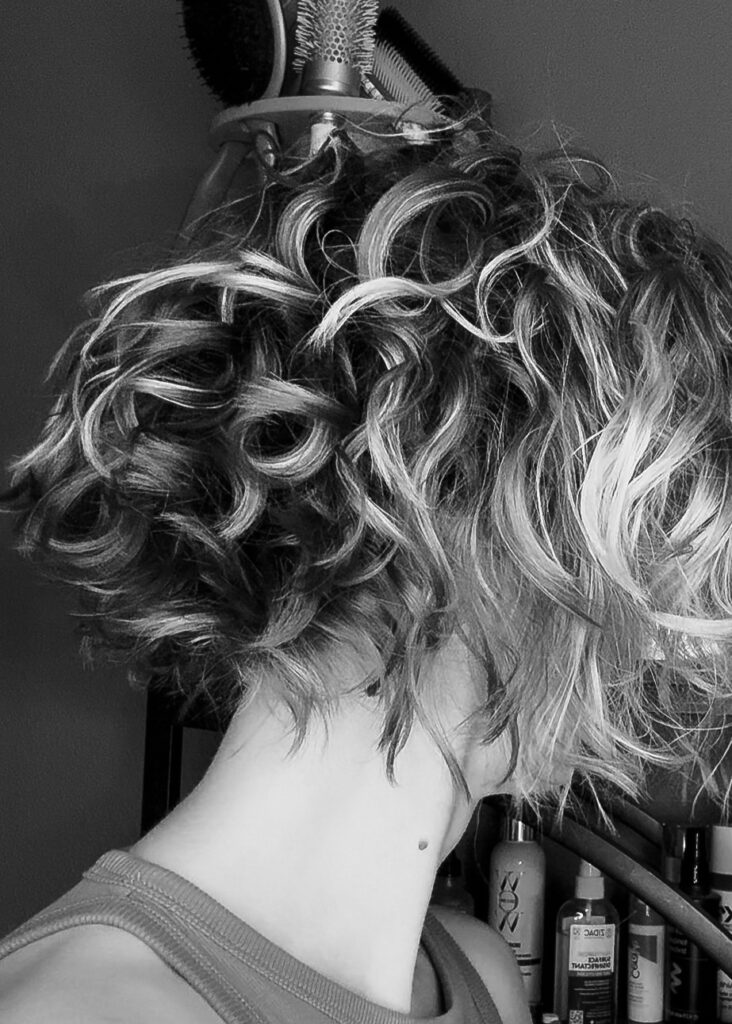
Conditioners are designed to close the hair cuticles with their lower pH level. They add softness to the strands and allow you to detangle your curls without causing breakage. Finding the right conditioner for your curls can be one of the hardest parts of your product shopping, especially with fine hair!
There are 3 main conditioning categories – Conditioner, Deep Conditioner, and Leave In Conditioner.
Typically fine hair needs less conditioning and if you have soft water you may find this also! Many conditioners contain heavier butters such as Shea Butter so it really can become quite tricky! You may actually find great success with using a leave in conditioner as a normal rinse out conditioner as they’re designed to be lighter. When conditioning, if you are having trouble detangling, add more water, not more conditioner. It is the beautiful mixture of water and conditioner that provides you with the slip to detangle.
Deep Conditioner
Deep conditioners are designed to be left on the hair for a little longer so that they can penetrate into the hair shaft and deliver a deeper hit of moisture. These are more beneficial for those with coarse, or dry, damaged hair though and for fine hair you may find that you only need to use one during the winter, and sometimes not even then. I personally couldn’t tell you the last time that I deep conditioned! If you find that you do need one but that it weighs your curls down you could try a “Dirty DC”. This is using it before you wash.
- Wet your hair
- Apply the deep conditioner and detangle
- Leave on for the desired time
- Rinse and wash as normal.
This way you get the benefits without weighing your hair down.
Leave In Conditioner –
Much like with deep conditioning, many people with fine hair find that they do not need a leave in conditioner but if you do, rest assured that these are designed to be left on the hair so are lighter. This is why many like to use them as a normal rinse out conditioner. They smooth the hair cuticles and deliver ongoing moisture so are amazing if your hair is on the dry/damaged side.
Tips for using a leave in conditioner on fine hair –
- Choose a lightweight mist or spray
- Use a small amount!
- Apply to soaking wet hair before any of your stylers
- Avoid your roots and apply from your ears down
- If you choose to use a leave in conditioner, do not use a cream during styling.
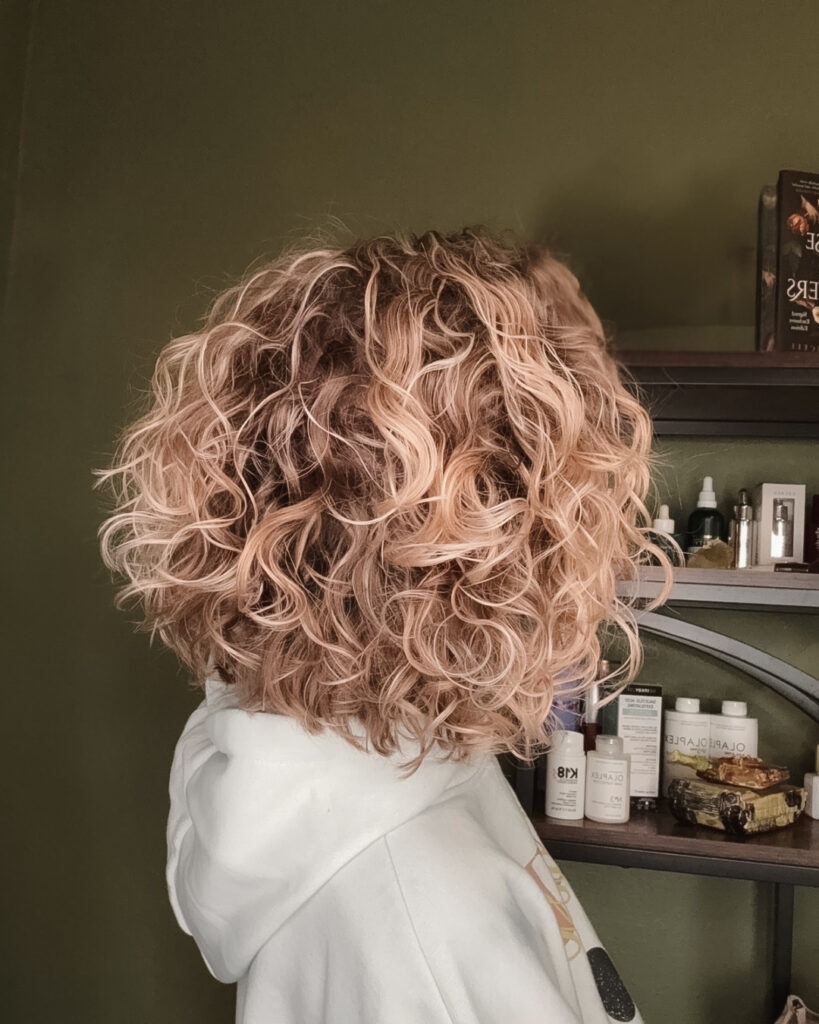
Styling –
I could write about 15 different blog posts on styling as it is a massive category, especially when you start delving into all the different products, styler combinations and techniques; but remember, we’re talking about how to build a routine, so we have to keep it simple to get those basic steps, which you can then build on over the coming months. It’s a whole lifestyle change and a marathon, not a sprint. You are going to have the rest of your life to experiment with this!
The most important thing to remember is that it isn’t the stylers that make your curls. They just enhance them. I’ve spoken before about my cake analogy. Your curls are a cake. Your shampoo, conditioner and treatments are the ingredients for your cake and the stylers are the icing. If you were to pull your cake out of the oven and it all fell apart, no amount of icing, no matter how good it is, how expensive it is, or how many people rave about it, would put your cake back together. It is the same for your curls. If they all fall apart as you step out of the shower, no styler whether it is high end or high street, no matter how many influencers say it is the best thing since sliced bread, will put your curls back together.
“You create your curls whilst washing them.
Your stylers just enhance them.“
Your stylers, depending on which ones you choose, will give you hold and longevity. They will limit the amount of frizz and a provide shine. So let’s talk about whats on offer and how they work for fine hair.
Creams – These tend to be better suited for coarser textures and those with very dry hair. They do not provide hold but rather moisture. These are best applied to soaking wet hair before any other stylers.
Serums – These are lightweight and normally very runny. They have minimal hold but do help to enhance definition and fight frizz. They work lovely as a first styler with a gel layered on top.
Foam/Mousse – Again these tend to be very lightweight so are a top choice for fine curls. They have a light hold so you would preferably layer a gel on top if you want to achieve hold for more than a day. They are amazing for obtaining volume though!
Gel – You can get gels in everything from a light hold to a super hard hold depending on the brand and product, and some are heavier and more suited for coarse hair but there are so many on the market designed to be lightweight for fine hair. They help provide us with hold, definition and longevity. Most people, when using a gel, will opt to apply it as their last styler to lock that definition in. For fine hair try lightweight but a hard hold gel when first experimenting with gels.
The trick when deciding what stylers to choose is to decide what you want from your curls.
Do you just want volume and you are not worried about definition because you know that you will be washing daily? Opt for a serum and foam.
Do you want all the definition and hold? Choose a serum and a gel.
Do you want definition and hold but you also want some volume? Pair a foam and gel together.
“Decide your end goal and engineer it backwards“
Now you have the basic outline of your routine you can perfect it as you go. For example, say you are recovering from heat damage or you colour your hair. One washday a week you would add a bonding treatment into your wash. Do you know that your hair is damaged and air drying could make that worse? You’ve just created your drying routine with diffusing. And as you go you can experiment with techniques such as damp styling vs wet styling or dry plopping vs micro plopping. As you get to know your hair more you can tweak things depending on the seasons, your stage of life (pregnancy, menopause etc) and other hair stats like your porosity. (Post explaining porosity here!)
And please, above all else, just have fun with trying new things and building your routine step by step!